Cirene — affiliate and commission SaaS.
A multi-tenant platform where merchants run coupon campaigns, affiliates earn per sale through a running current account, and a commercial rep hierarchy is paid on its own quota structure. Rebuilt from a legacy Oracle APEX system that never reached production.
- Client
- Cirene
- Period
- 2026
- Role
- Architect & lead developer
Domain models
56
Application code
~44.5k LOC
Role hierarchies
4
Legacy replaced
14 PL/SQL pkgs

The problem
The business had spent more than a year building on Oracle APEX — fourteen PL/SQL packages, an Oracle database on OCI, ORDS REST endpoints and three Docker microservices — and still had nothing in front of a customer. The stack was not the failure by itself; the problem was that nobody could ship a change to it fast enough to learn anything.
The one advantage of that situation: there was no production data to migrate. The rewrite could be a clean cut.
The solution
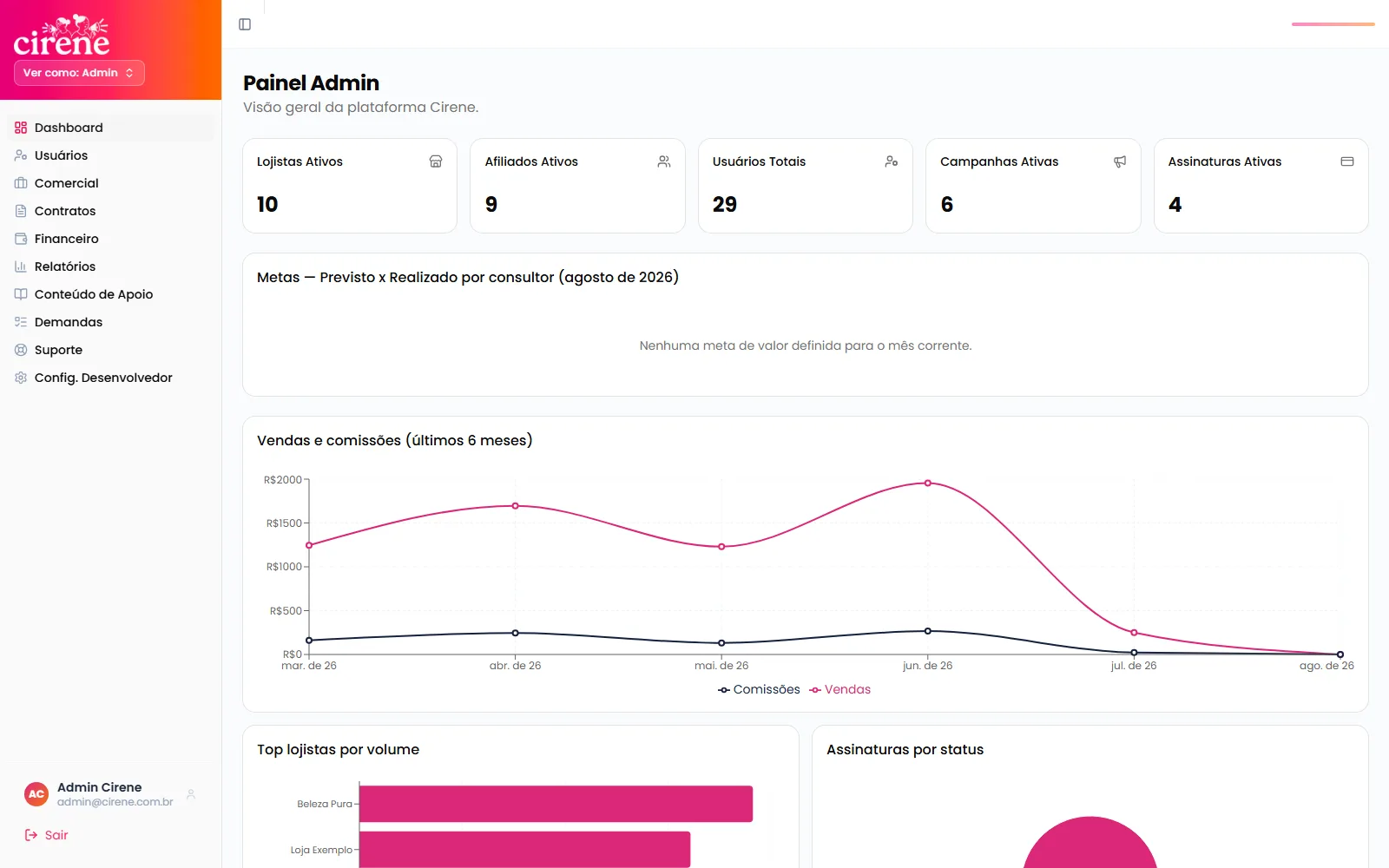
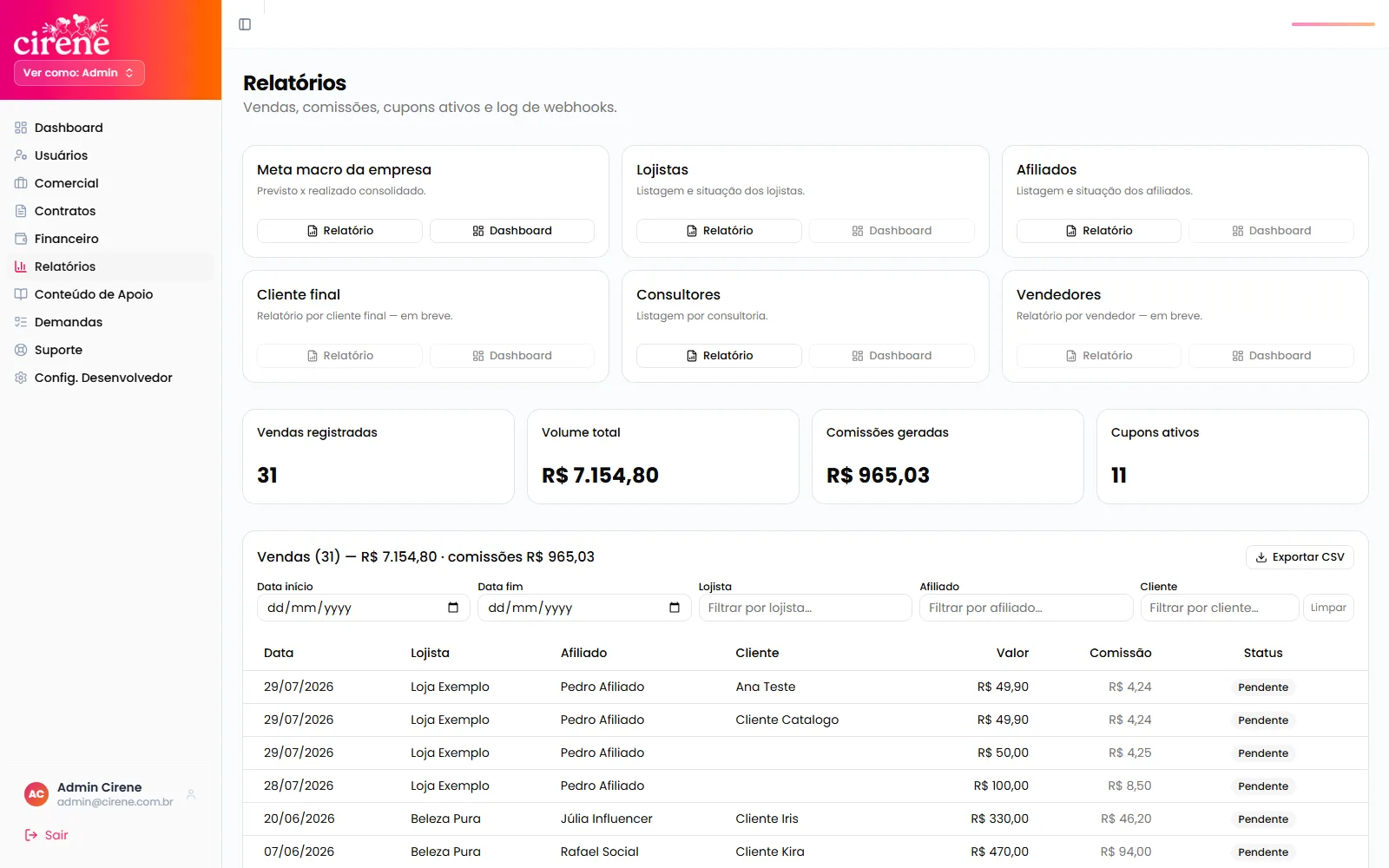
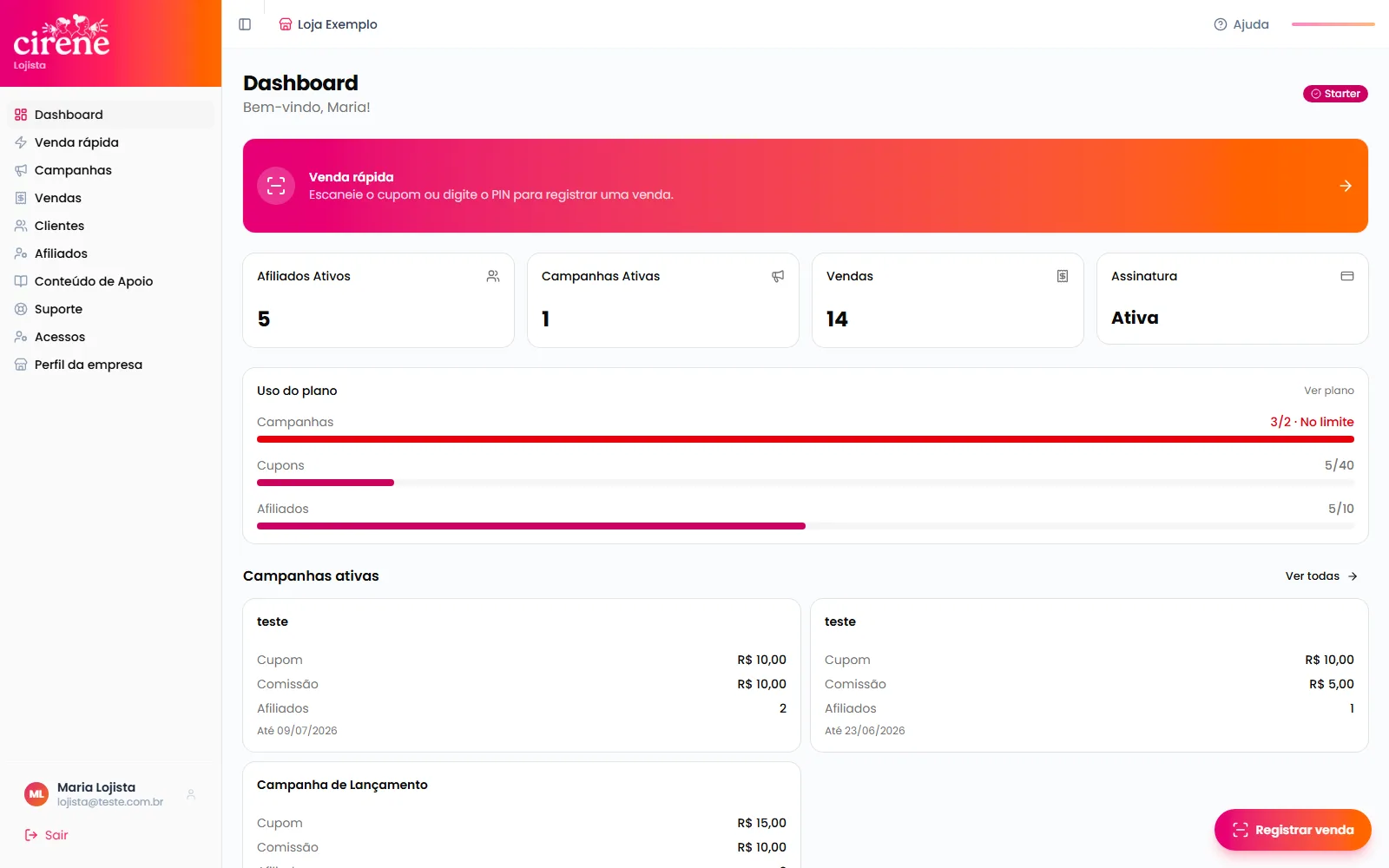
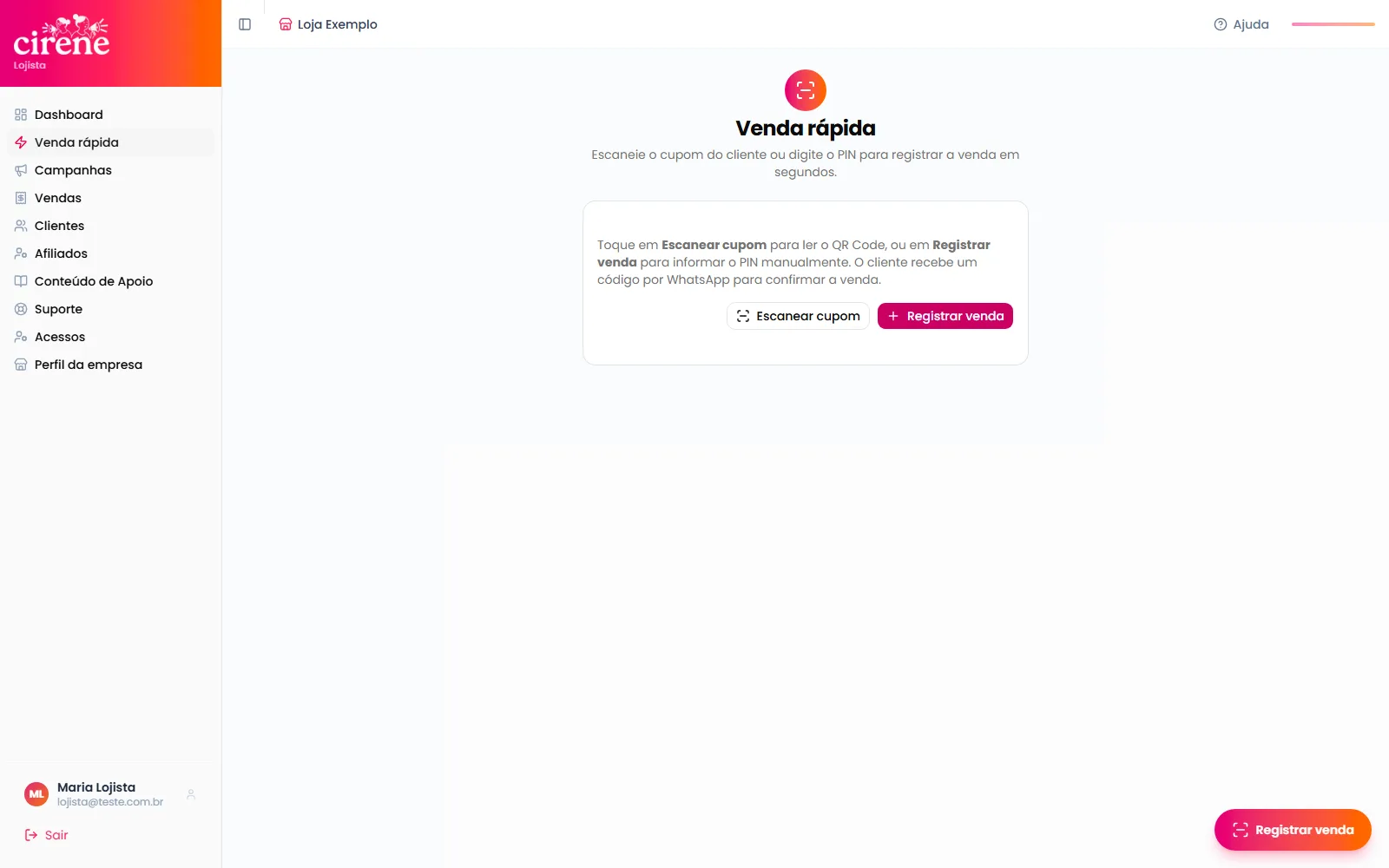
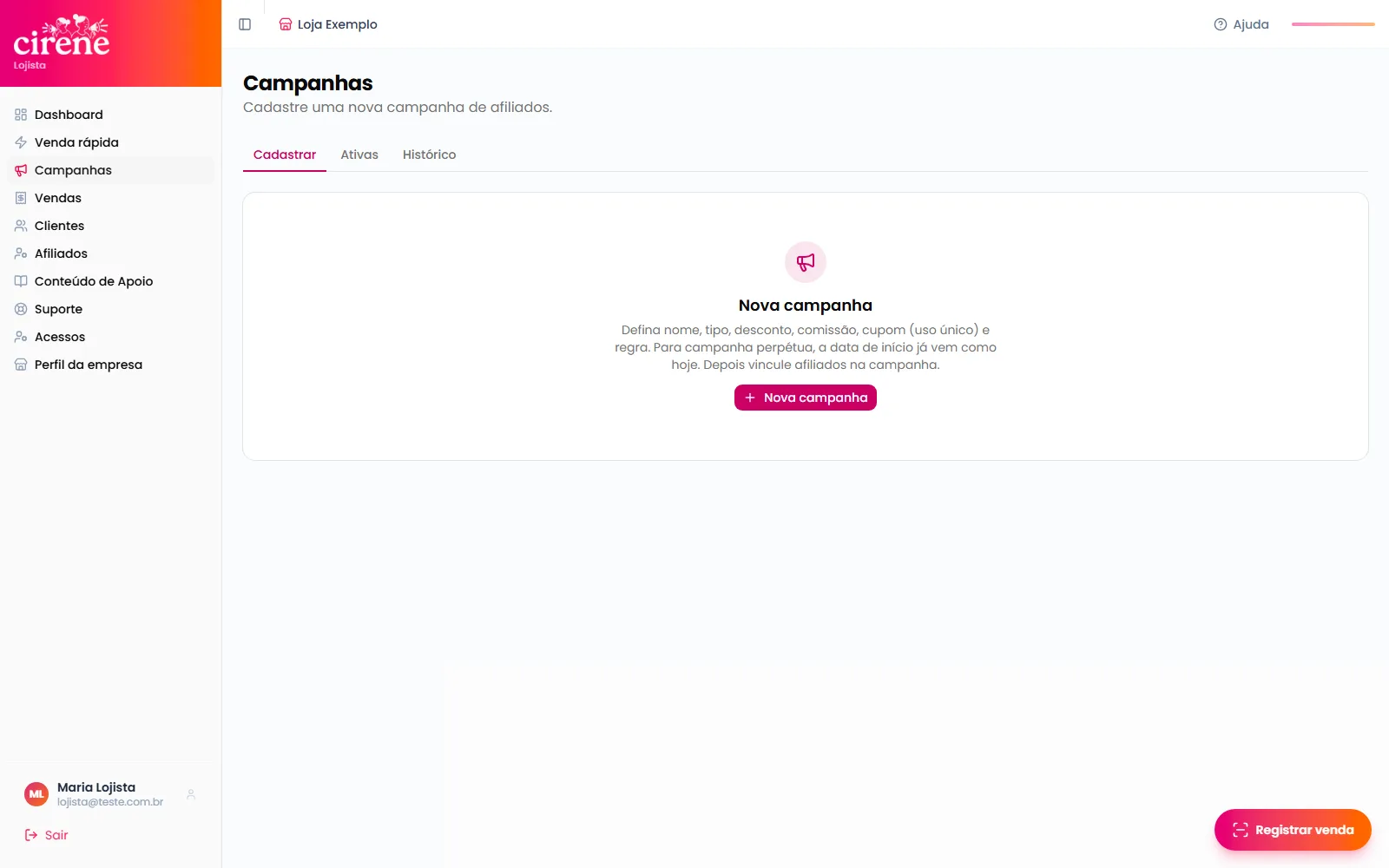
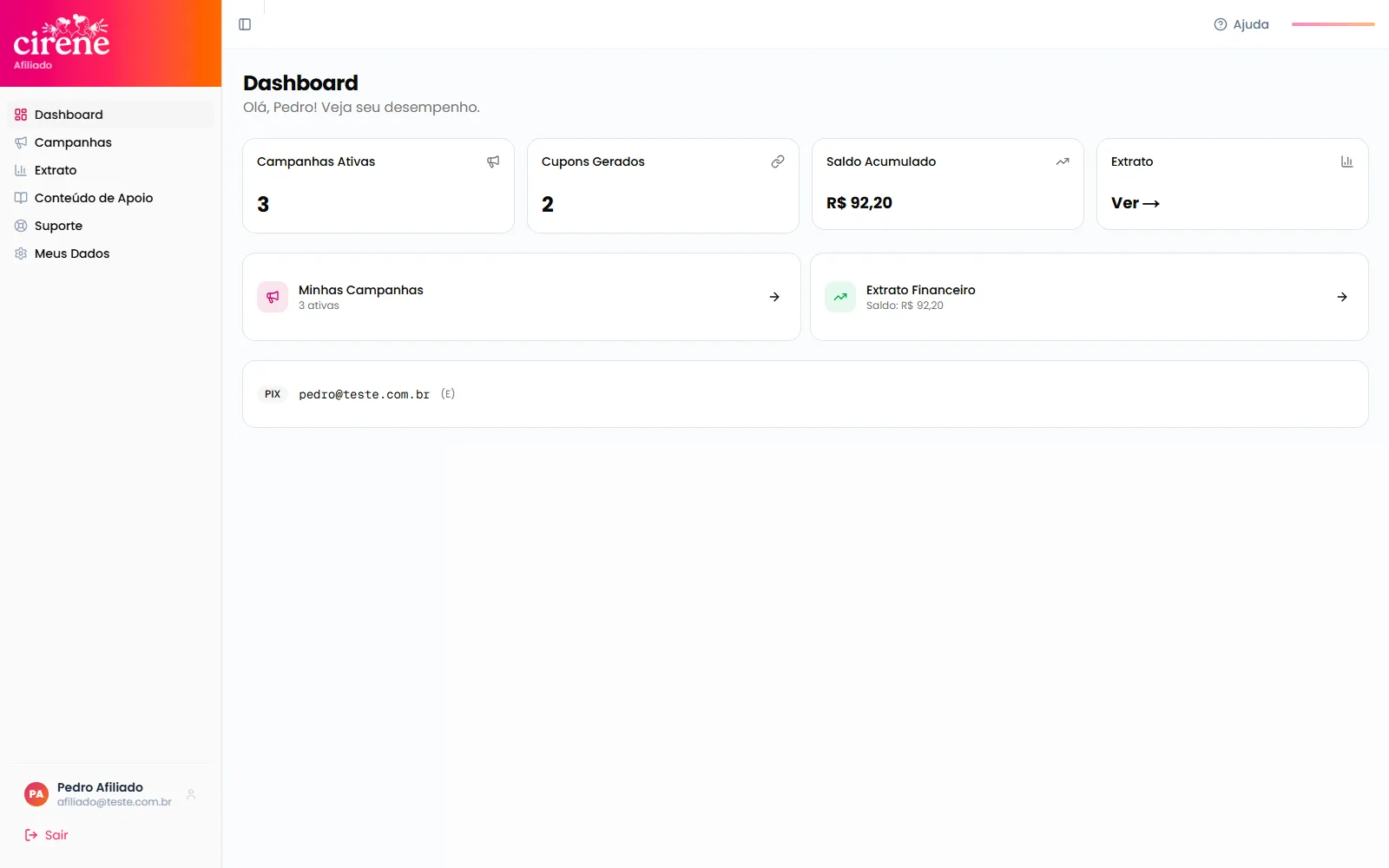
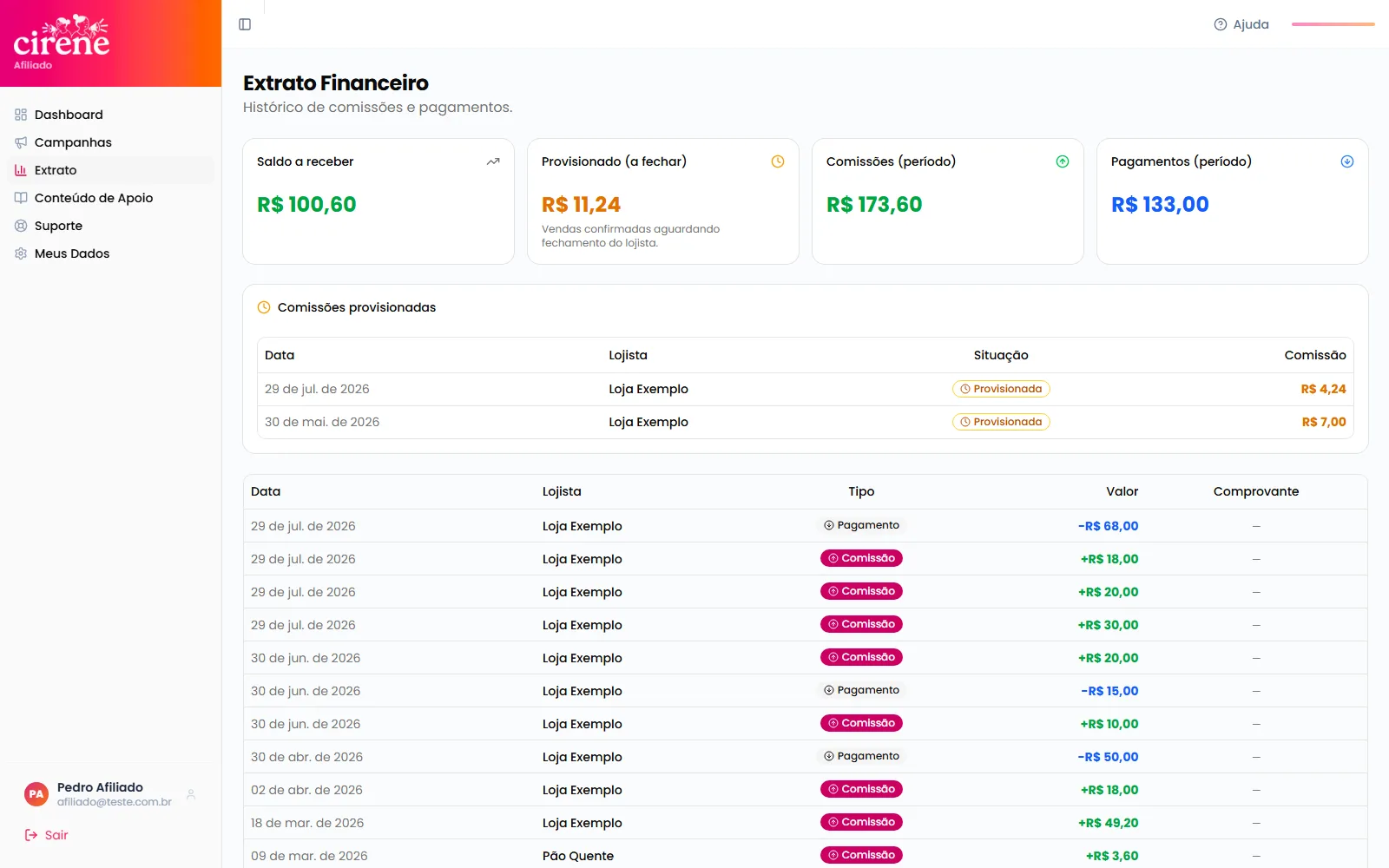
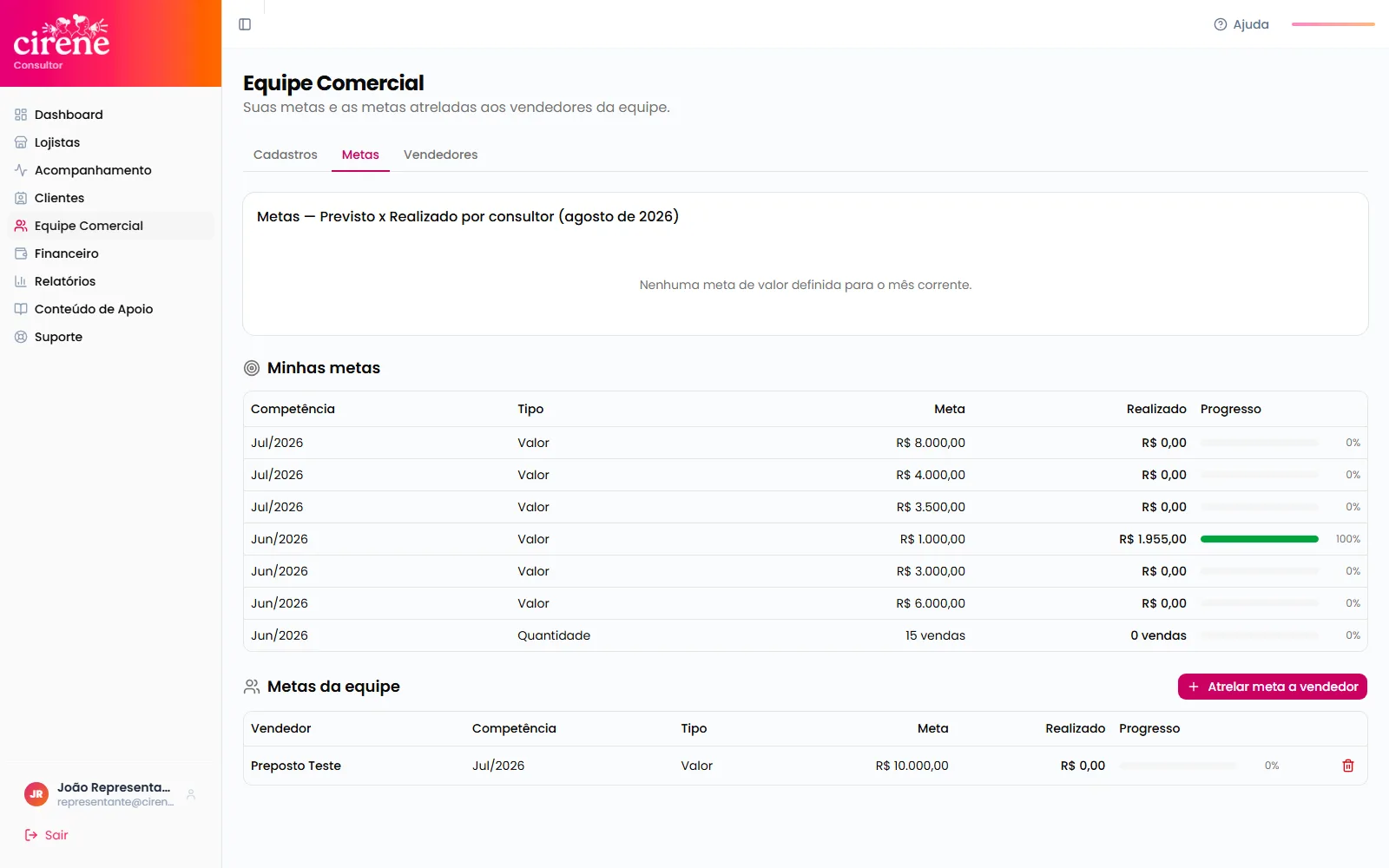
A full rewrite as a single Next.js application, delivered as four distinct portals over one domain model: admin, merchant, affiliate and commercial representative — the last one with its own sub-agents, quotas and monthly closing.
- Coupon and receipt images are generated server-side with satori and resvg, replacing the Puppeteer microservice the legacy stack needed for the same job.
- Contracts and terms are edited in a rich-text editor with variable interpolation, and acceptance is recorded with a signature trail.
- Support tickets, impersonation with an audit log and a public product catalogue round out what the operation actually uses day to day.
Architecture
A Next.js monolith on Server Actions, Prisma over PostgreSQL, fifty-six models covering the whole commercial chain. It ships as a multi-stage Docker image with standalone output alongside a compose file, so it can be self-hosted rather than locked to one platform.
- Payments. Asaas end to end — subscription checkout, Pix, detached Pix authorisation, webhook ingestion with replay tooling for debugging.
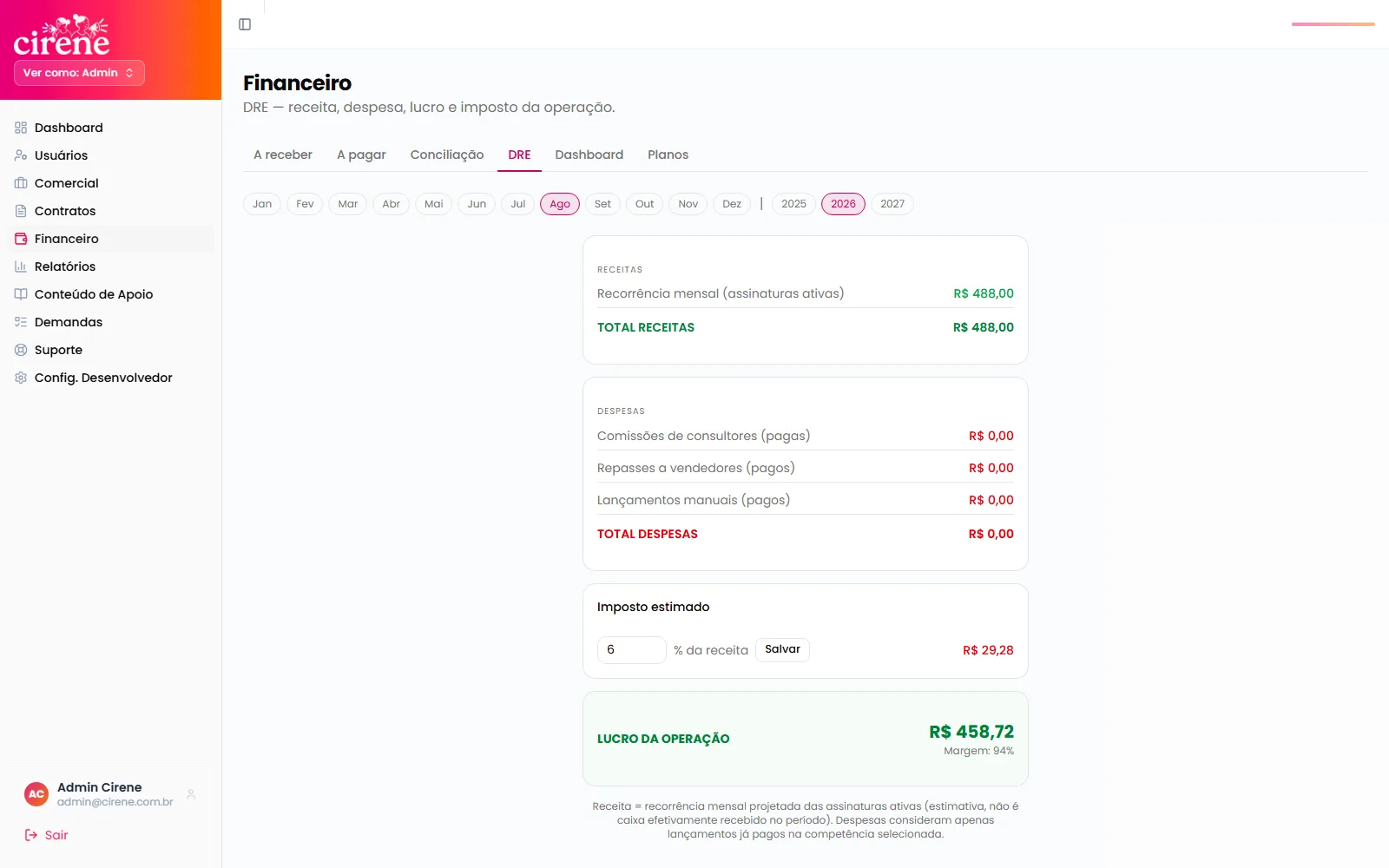
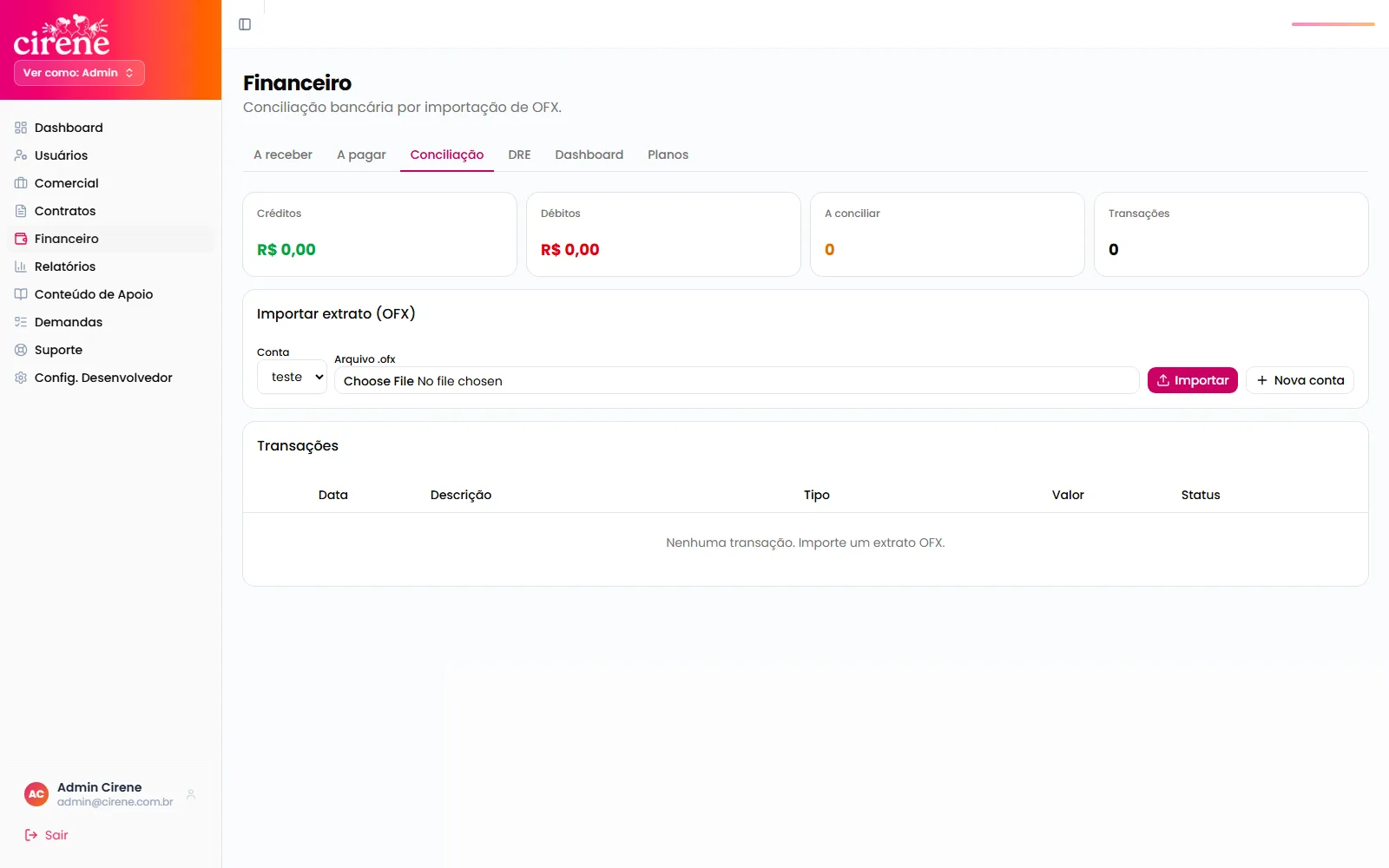
- Finance. An income statement, accounts payable, and OFX bank-statement import reconciled against booked entries.
- Messaging. WhatsApp Cloud API with scripted template lifecycle management — creation, verification and documentation generation — because template approval is the slowest link in that chain.
- Four cron endpoints handle Pix subscription renewal, expiring subscriptions, rep monthly closing and trial expiry.
Results
The system reached production and a staging environment inside the same year the rewrite started, against a legacy stack that had not shipped in over a year. Commercial, financial and affiliate sides all run on one database with one permission model, and onboarding a new merchant no longer requires a developer.
Full stack